110 terms
| Abbreviation | Full definition | Explanation |
|---|---|---|
| 3PL# | Third-Party Logistics | Logistics activities (storage, distribution, etc.) that companies carry out by outsourcing them to an external provider. |
| 4PL# | Fourth-Party Logistics | Logistics organisation and management activities that companies carry out by outsourcing. 4PL providers usually manage the entire supply chain on behalf of the manufacturer or service provider. |
| ADR# | Dangerous Goods – Road | European Agreement concerning the International Carriage of Dangerous Goods by Road |
| AGS# | Aden Gulf Surcharge | Risk surcharge for passing through the Gulf of Aden |
| AGV# | Automated Guided Vehicle | A material handling system using robots or automated vehicles such as carts, pallets or trays programmed to move between different production and warehouse stations without a driver. These systems are used to increase efficiency by limiting the number of employees needed, reduce damage to products and lower overall costs. |
| AS-RS# | Automated storage and retrieval systems | A variety of computer-controlled systems that automatically place and retrieve loads from defined storage locations |
| ATA# | Actual Time of Arrival | Actual time of arrival |
| ATA-Carnet# | ATA Carnet | Document allowing the temporary export and import of goods |
| ATD# | Actual Time of Departure | Actual time of departure |
| AWB# | Air WayBill | Air waybill |
| B-L# | Bill of Lading | Ocean bill of lading |
| B100# | Biodiesel | “B100 is a biologically based fuel according to the biodiesel standard (NS-EN14214). B100 consists of 100% rapeseed methyl ester (RME).” |
| B2B# | Business to Business | Trade between companies |
| B2C# | Business to Consumer | Trade aimed at the end consumer |
| BAF# | Bunker Adjustment Factor | Freight surcharges requested by carriers to offset fluctuations in oil prices |
| Barcode# | Barcode | Barcode number |
| Break-bulk# | Goods that must be loaded individually, not in intermodal containers or in bulk as with oil or grain | Ships carrying this type of cargo are called general cargo ships |
| CAF# | Currency Adjustment Factor | Freight surcharges requested by carriers to offset fluctuations in exchange rates |
| Cbm# | Cubic metre | Volume of a cube with each edge measuring 1 m – m3 |
| Certificate of Origin# | Certificate of Origin | Certificate of origin |
| CFR# | Cost and Freight | Freight paid by the sender, insurance by the buyer |
| Chargeable weight# | Chargeable weight | Freight calculated on a weight basis according to the space occupied |
| Chassis# | Chassis / semi-trailer | Skeletal chassis for container transport |
| CIF# | Cost, Insurance and Freight | Freight and insurance paid by the sender |
| CIP# | Carriage and Insurance Paid to | Delivered to the carrier with freight and insurance paid and export clearance completed |
| CMR# | International consignment note | Legally binding international road freight document |
| Co2# | Carbon dioxide | Carbon dioxide is a colourless gas and one of the most important gases linked to global warming. |
| Co2e# | Carbon dioxide equivalent | “CO2e essentially describes the global warming potential of all greenhouse gases. In other words, the effect of different greenhouse gases is expressed as the amount of CO2 that would cause the same warming. Simply put, CO2e brings all greenhouse gases together in one figure.” |
| COD# | Cash on Delivery | Payment by cash, also called collect on delivery, no invoice possible |
| COD# | Change of Destination | Change of agreed delivery address |
| Consignee# | Consignee | Receiver |
| Consignor# | Consignor | The sender/shipper of the goods is where the goods are sent/shipped from |
| Control Tower# | Control Tower | Expert teams that seamlessly manage and further improve the supply chain and product flow for businesses |
| Conversion key# | Conversion key | Reference table for converting between units of measurement |
| CPT# | Carriage Paid To | Delivered to the carrier with freight paid |
| Cross docking# | Cross docking | Sending goods arriving from suppliers on to dispatch points within a set time, without storing them in the warehouse |
| DAP# | Delivered at Place | Delivered to the buyer, excluding taxes and duties |
| DAT# | Delivered at Terminal | Delivered to the buyer’s terminal |
| DDP# | Delivered Duty Paid | Delivered to the buyer with duties paid |
| Deep sea# | Deep sea | Intercontinental sea transport |
| Demurrage# | Demurrage | Charge applied when equipment is kept beyond the permitted free time |
| Detention# | Detention | Container rental charge |
| DGR# | Dangerous goods regulations | Dangerous goods rules – air transport |
| Dry bulk cargo# | Dry bulk cargo | Dry, unpackaged bulk cargo such as sand, grain, etc. |
| Dökme# | Commodity cargo transported unpackaged in large quantities | Refers to material in liquid or granular form, or relatively small solid masses such as crude oil, grain, coal or gravel. |
| EAN# | European Article Numbering | European barcode |
| EcoVadis# | EcoVadis | EcoVadis provides holistic sustainability ratings for companies. The EcoVadis Rating covers a wide range of non-financial management systems, including Environmental, Labour and Human Rights, Ethics and Sustainable Procurement impacts. Each company is rated on the material issues relevant to its size, location and industry. |
| EDI# | Electronic Data Interchange | Electronic data exchange between applications |
| eMethanol# | eMethanol | E-methanol is produced by combining green hydrogen with carbon dioxide captured from industrial sources. It still releases some greenhouse gases when burned, but emits less carbon dioxide, nitrogen oxides, sulphur oxides and particulate matter than conventional marine fuel. |
| Emission Calculations# | Emission calculations | “Emission calculations measure the direct and indirect output of greenhouse gas (GHG) and carbon dioxide emissions generated by an individual, organisation, product or event. They help identify excessive energy use or other inefficiencies that raise operating costs, and help protect the environment.” |
| ERP# | Enterprise resource planning | Integrated management of core business processes, often in real time, mediated by software and technology |
| ETA# | Estimated Time of Arrival | Estimated arrival date |
| ETD# | Estimated Time of Departure | Estimated departure date |
| EUR-1 certificate# | EUR-1 certificate | EUR-1 movement certificate |
| EXW# | Ex Works | International trade term stating that the seller makes the goods available at a named place and the buyer covers the transport costs |
| FAS# | Free Alongside Ship | Delivered alongside the ship |
| FCA# | Free Carrier | Delivered at the named place, to the buyer’s carrier, etc. |
| FCL# | Full Container Load | Full container loading |
| Feeder# | Feeder vessel | Vessels operating between transhipment ports |
| FEU -/FFU# | Forty Equivalent Unit / Forty Foot Unit | 40-foot container equivalent unit |
| FOB# | Free On Board | Delivered on board the vessel, freight paid by the buyer |
| FSC# | Fuel SurCharge | Freight surcharges requested by carriers when fuel prices rise |
| FTL# | Full Truck Load | Truck fully loaded with goods |
| GHG Calculations# | GHG calculations | “The carbon footprint is a CO2 measure in which greenhouse gas emissions are calculated as CO2 equivalent. CO2 is part of the CO2 equivalent. Greenhouse gases also include gases other than CO2 that are responsible for global warming.” |
| GSP Certificate# | General System of Preferences Certificate | Preferential origin under the Generalised System of Preferences (GSP); Form A |
| HAWB# | House Air WayBill | House air waybill |
| HAZMAT# | Hazardous Material | Dangerous goods – air transport |
| HBL# | House Bill of Lading | House ocean bill of lading |
| IATA# | International Air Transport Association | International Air Transport Association |
| IOD# | Information on delivery | Information on delivery |
| LCL# | Less than Container Load | Part container loading |
| Lm# | Loading metre | Each metre of floor space the goods occupy in the vehicle |
| Lo-Lo# | Lift on / Lift off | Loading / unloading by crane |
| MAWB# | Master Air WayBill | Master air waybill |
| MBL# | Master Bill of Lading | Master ocean bill of lading |
| Missing IOD# | Missing IOD | Missing IOD, no information on delivery of the goods |
| NMHC# | Non-methane hydrocarbons | NMHC means the sum of all hydrocarbon air pollutants except methane. |
| Notify party# | Notify party | Notify address, to be informed on arrival |
| NOx# | Nitrogen oxides | “NOx is a mixture of nitrogen-containing gases, especially the nitrogen oxides NO, NO2 and N2O3. NOx contributes to air pollution and is an important component of photochemical smog.” |
| NVOCC# | Non Vessel Operating Common Carrier | Common carrier that does not operate vessels and can issue bills of lading |
| PDA# | Scanner | Handheld scanner for reading the barcode on the labels |
| POD (road freight)# | Proof of delivery | Document bearing the receiver’s signature that proves delivery of the goods – road freight |
| POD (sea freight)# | Port Of Discharge | Port of discharge |
| POL# | Port Of Loading | Port of loading |
| Project Cargo# | Project cargo | A term broadly describing the national or international transport of large, heavy, high-value or critical (for the project they are intended for) pieces of equipment. Also often called heavy-lift cargo. |
| Reefer# | Refrigerated container | Container with refrigeration equipment |
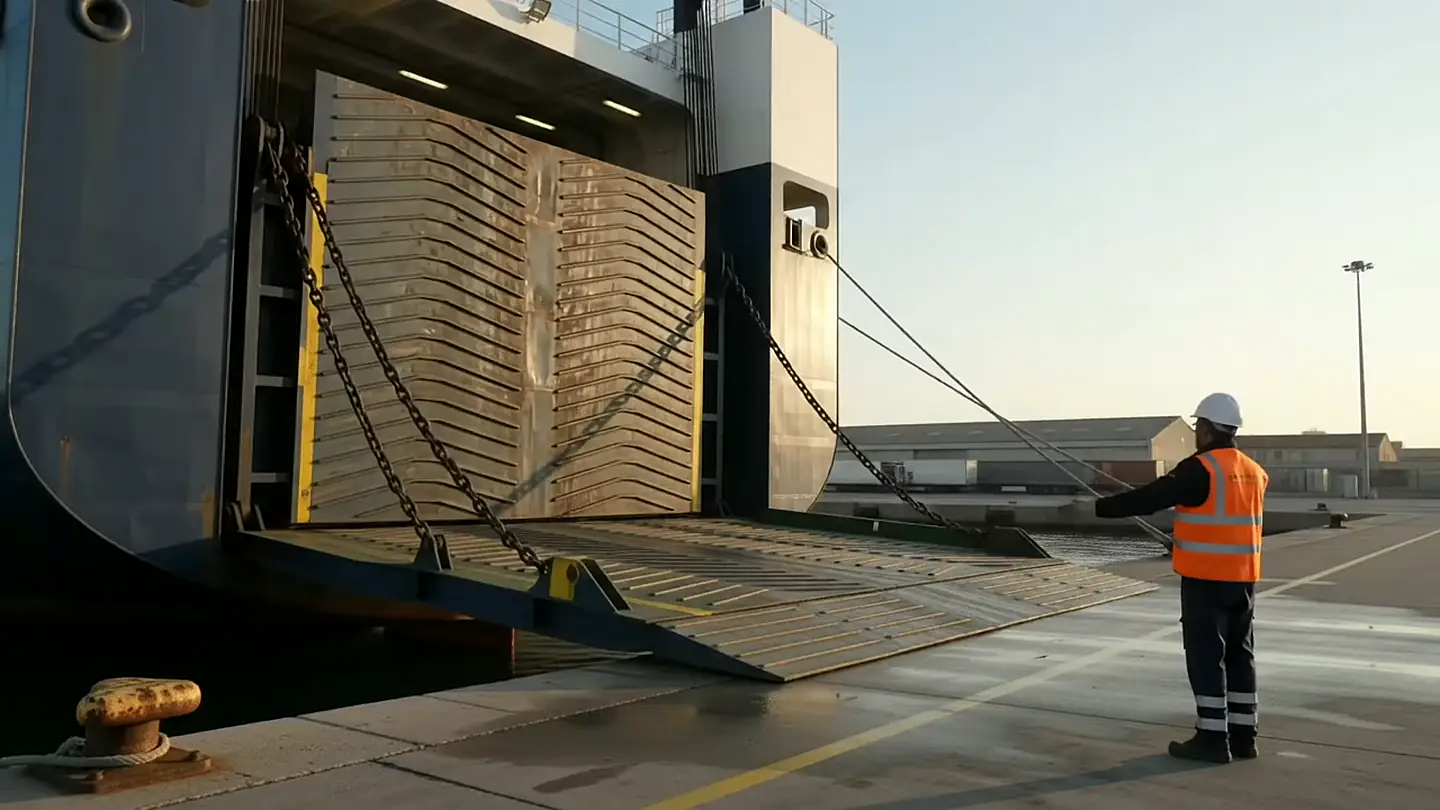
| Ro-Ro# | Ro-Ro vessel | Ro-Ro vessel used for transporting wheeled vehicles |
| SBTi# | Science Based Targets initiative | The Science Based Targets initiative aims to drive ambitious corporate climate action. |
| SCM# | Supply chain management | Management of the flow of goods and services, including the movement and storage of raw materials, work-in-process inventory and finished goods from the point of origin to the point of consumption. Interconnected networks, channels and node businesses combine in a supply chain to provide the products and services end customers need. |
| SECA# | Sulphur Emission Control Area | Emission Control Areas for sea shipments. In certain geographical areas specific emission limits apply to sea transport; shipping companies operating there must use fuel that produces lower sulphur emissions than conventional fuel. The cost of this fuel is charged to the freight receiver as the SECA surcharge. |
| Shipper# | Shipper | Sender |
| Short sea# | Short sea | Short sea shipping |
| SLA# | Service Level Agreement | Service level agreement regarding delivery times |
| SOx# | Sulphur oxides | Emissions of sulphur oxides (SO2, SO3) into the atmosphere, mainly from burning sulphur-containing fuels; they contribute to air pollution and acid rain. |
| SSC# | Security SurCharge | Freight surcharges requested by carriers to cover security risks |
| Stevedore# | Stevedore | Loading/unloading worker or company |
| Stripping# | Stripping of container | Unloading of the container |
| Stuffing# | Stuffing of container | Loading of the container |
| Sustainability rating# | Sustainability rating | A sustainability rating measures how well a company performs in terms of environmental and social responsibility. |
| TEU# | Twenty foot Equivalent Unit | 20-foot container equivalent unit |
| THC# | Terminal Handling Charge | Stacking and handling charges at the port |
| TMS-TA# | Transport management system | A subset of supply chain management dealing with transport operations, which may be part of an enterprise resource planning (ERP) system |
| Tonnkilometer# | Tonne-kilometre | Weight of goods carried over a distance. 10 tonnes carried 2 km equals 20 tonne-kilometres. |
| Transit harbour# | Transit harbour | Transit port |
| ULD# | Unit Load Device | Unit load device (air cargo) |
| VAL# | Valuable Cargo | Valuable cargo: shipments worth USD 1,000 or more per kilogram |
| W-M# | Weight / Measurement | Weight / measurement |
| Wet bulk cargo# | Wet bulk cargo | Liquid, unpackaged bulk loads such as oil |
| WMS# | Warehouse management system | A software application developed to optimise warehouse operations and the internal distribution centre system |
| Zero Emissions# | Zero Emissions | Means there are no greenhouse gas emissions. |
